 Add to Chrome
 Add to Firefox
 Add to Edge
Training LLMs with Fault Tolerant HSDP on 100,000 GPUs
Jan 30, 2026
Large-scale training systems typically use synchronous training, requiring all GPUs to be healthy simultaneously. In our experience training on O(100K) GPUs, synchronous training results in a low efficiency due to frequent failures and long recovery time. To address this problem, we propose a novel training paradigm, Fault Tolerant Hybrid-Shared Data Parallelism (FT-HSDP). FT-HSDP uses data parallel replicas as units of fault tolerance. When failures occur, only a single data-parallel replica containing the failed GPU or server is taken offline and restarted, while the other replicas continue training. To realize this idea at scale, FT-HSDP incorporates several techniques: 1) We introduce a Fault Tolerant All Reduce (FTAR) protocol for gradient exchange across data parallel replicas. FTAR relies on the CPU to drive the complex control logic for tasks like adding or removing participants dynamically, and relies on GPU to perform data transfer for best performance. 2) We introduce a non-blocking catch-up protocol, allowing a recovering replica to join training with minimal stall. Compared with fully synchronous training at O(100K) GPUs, FT-HSDP can reduce the stall time due to failure recovery from 10 minutes to 3 minutes, increasing effective training time from 44\% to 80\%. We further demonstrate that FT-HSDP's asynchronous recovery does not bring any meaning degradation to the accuracy of the result model.

The Llama 4 Herd: Architecture, Training, Evaluation, and Deployment Notes
Jan 15, 2026This document consolidates publicly reported technical details about Metas Llama 4 model family. It summarizes (i) released variants (Scout and Maverick) and the broader herd context including the previewed Behemoth teacher model, (ii) architectural characteristics beyond a high-level MoE description covering routed/shared-expert structure, early-fusion multimodality, and long-context design elements reported for Scout (iRoPE and length generalization strategies), (iii) training disclosures spanning pre-training, mid-training for long-context extension, and post-training methodology (lightweight SFT, online RL, and lightweight DPO) as described in release materials, (iv) developer-reported benchmark results for both base and instruction-tuned checkpoints, and (v) practical deployment constraints observed across major serving environments, including provider-specific context limits and quantization packaging. The manuscript also summarizes licensing obligations relevant to redistribution and derivative naming, and reviews publicly described safeguards and evaluation practices. The goal is to provide a compact technical reference for researchers and practitioners who need precise, source-backed facts about Llama 4.
Meta Lattice: Model Space Redesign for Cost-Effective Industry-Scale Ads Recommendations
Dec 15, 2025The rapidly evolving landscape of products, surfaces, policies, and regulations poses significant challenges for deploying state-of-the-art recommendation models at industry scale, primarily due to data fragmentation across domains and escalating infrastructure costs that hinder sustained quality improvements. To address this challenge, we propose Lattice, a recommendation framework centered around model space redesign that extends Multi-Domain, Multi-Objective (MDMO) learning beyond models and learning objectives. Lattice addresses these challenges through a comprehensive model space redesign that combines cross-domain knowledge sharing, data consolidation, model unification, distillation, and system optimizations to achieve significant improvements in both quality and cost-efficiency. Our deployment of Lattice at Meta has resulted in 10% revenue-driving top-line metrics gain, 11.5% user satisfaction improvement, 6% boost in conversion rate, with 20% capacity saving.
The Llama 3 Herd of Models
Jul 31, 2024Modern artificial intelligence (AI) systems are powered by foundation models. This paper presents a new set of foundation models, called Llama 3. It is a herd of language models that natively support multilinguality, coding, reasoning, and tool usage. Our largest model is a dense Transformer with 405B parameters and a context window of up to 128K tokens. This paper presents an extensive empirical evaluation of Llama 3. We find that Llama 3 delivers comparable quality to leading language models such as GPT-4 on a plethora of tasks. We publicly release Llama 3, including pre-trained and post-trained versions of the 405B parameter language model and our Llama Guard 3 model for input and output safety. The paper also presents the results of experiments in which we integrate image, video, and speech capabilities into Llama 3 via a compositional approach. We observe this approach performs competitively with the state-of-the-art on image, video, and speech recognition tasks. The resulting models are not yet being broadly released as they are still under development.
Wukong: Towards a Scaling Law for Large-Scale Recommendation
Mar 08, 2024


Scaling laws play an instrumental role in the sustainable improvement in model quality. Unfortunately, recommendation models to date do not exhibit such laws similar to those observed in the domain of large language models, due to the inefficiencies of their upscaling mechanisms. This limitation poses significant challenges in adapting these models to increasingly more complex real-world datasets. In this paper, we propose an effective network architecture based purely on stacked factorization machines, and a synergistic upscaling strategy, collectively dubbed Wukong, to establish a scaling law in the domain of recommendation. Wukong's unique design makes it possible to capture diverse, any-order of interactions simply through taller and wider layers. We conducted extensive evaluations on six public datasets, and our results demonstrate that Wukong consistently outperforms state-of-the-art models quality-wise. Further, we assessed Wukong's scalability on an internal, large-scale dataset. The results show that Wukong retains its superiority in quality over state-of-the-art models, while holding the scaling law across two orders of magnitude in model complexity, extending beyond 100 Gflop or equivalently up to Large Language Model (GPT-3) training compute scale, where prior arts fall short.
Disaggregated Multi-Tower: Topology-aware Modeling Technique for Efficient Large-Scale Recommendation
Mar 07, 2024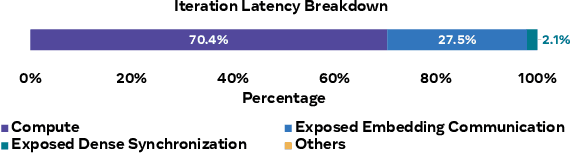
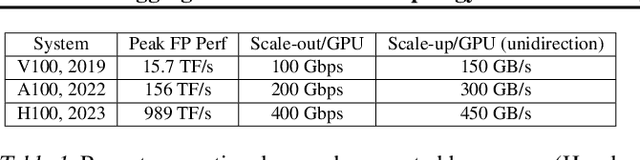
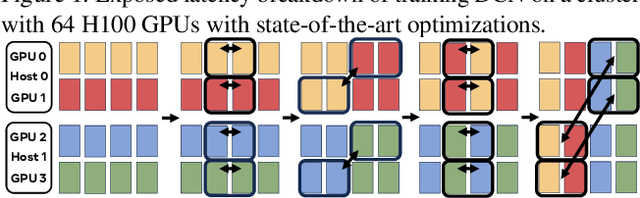
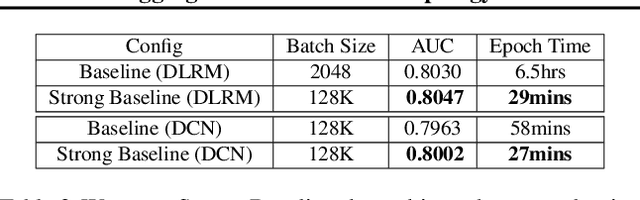
We study a mismatch between the deep learning recommendation models' flat architecture, common distributed training paradigm and hierarchical data center topology. To address the associated inefficiencies, we propose Disaggregated Multi-Tower (DMT), a modeling technique that consists of (1) Semantic-preserving Tower Transform (SPTT), a novel training paradigm that decomposes the monolithic global embedding lookup process into disjoint towers to exploit data center locality; (2) Tower Module (TM), a synergistic dense component attached to each tower to reduce model complexity and communication volume through hierarchical feature interaction; and (3) Tower Partitioner (TP), a feature partitioner to systematically create towers with meaningful feature interactions and load balanced assignments to preserve model quality and training throughput via learned embeddings. We show that DMT can achieve up to 1.9x speedup compared to the state-of-the-art baselines without losing accuracy across multiple generations of hardware at large data center scales.
Microscaling Data Formats for Deep Learning
Oct 19, 2023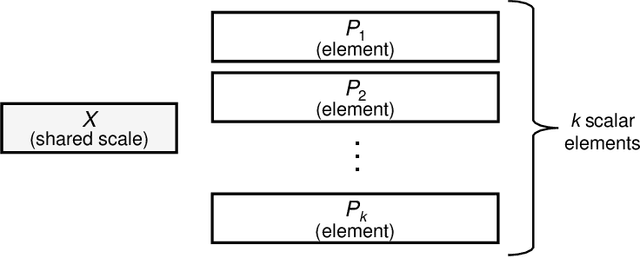
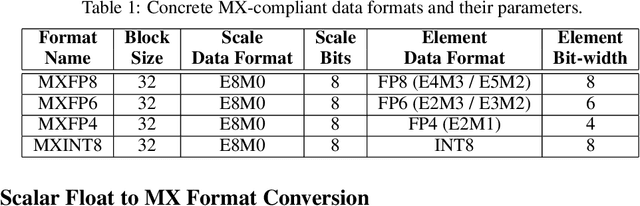
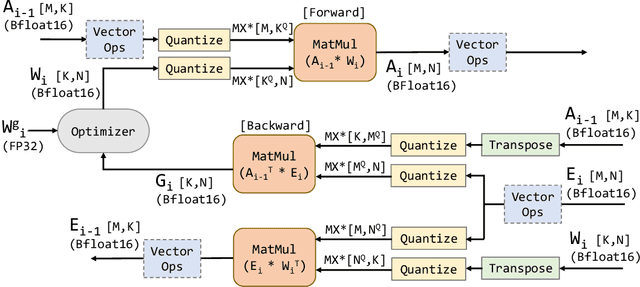

Narrow bit-width data formats are key to reducing the computational and storage costs of modern deep learning applications. This paper evaluates Microscaling (MX) data formats that combine a per-block scaling factor with narrow floating-point and integer types for individual elements. MX formats balance the competing needs of hardware efficiency, model accuracy, and user friction. Empirical results on over two dozen benchmarks demonstrate practicality of MX data formats as a drop-in replacement for baseline FP32 for AI inference and training with low user friction. We also show the first instance of training generative language models at sub-8-bit weights, activations, and gradients with minimal accuracy loss and no modifications to the training recipe.
Shared Microexponents: A Little Shifting Goes a Long Way
Feb 16, 2023

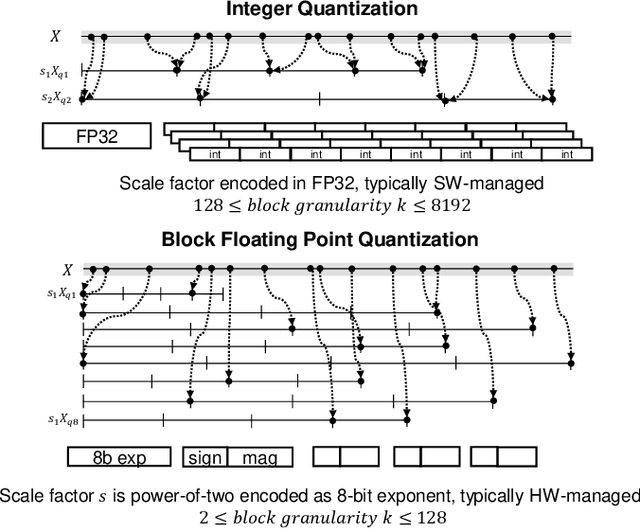
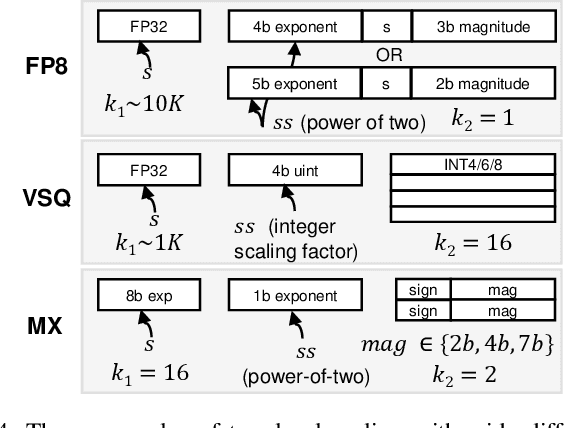
This paper introduces Block Data Representations (BDR), a framework for exploring and evaluating a wide spectrum of narrow-precision formats for deep learning. It enables comparison of popular quantization standards, and through BDR, new formats based on shared microexponents (MX) are identified, which outperform other state-of-the-art quantization approaches, including narrow-precision floating-point and block floating-point. MX utilizes multiple levels of quantization scaling with ultra-fine scaling factors based on shared microexponents in the hardware. The effectiveness of MX is demonstrated on real-world models including large-scale generative pretraining and inferencing, and production-scale recommendation systems.
Learning to Collide: Recommendation System Model Compression with Learned Hash Functions
Mar 28, 2022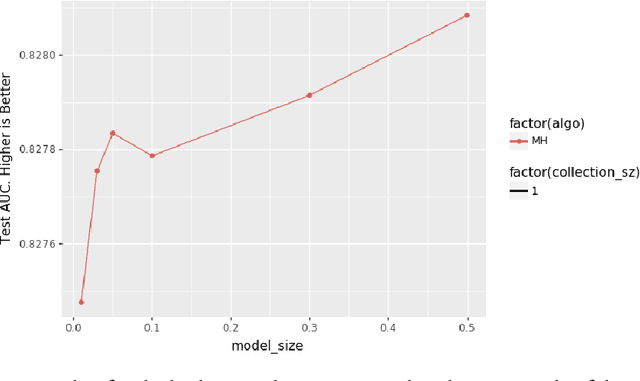

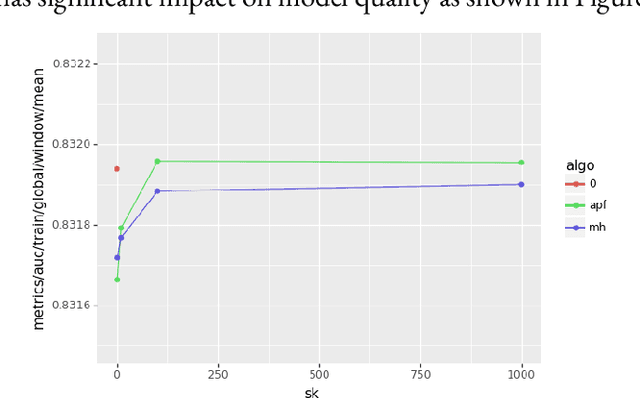
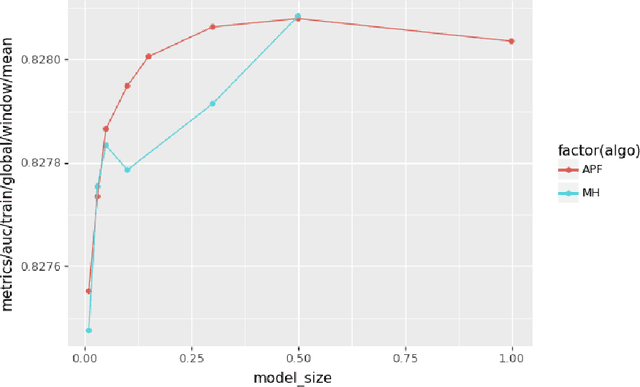
A key characteristic of deep recommendation models is the immense memory requirements of their embedding tables. These embedding tables can often reach hundreds of gigabytes which increases hardware requirements and training cost. A common technique to reduce model size is to hash all of the categorical variable identifiers (ids) into a smaller space. This hashing reduces the number of unique representations that must be stored in the embedding table; thus decreasing its size. However, this approach introduces collisions between semantically dissimilar ids that degrade model quality. We introduce an alternative approach, Learned Hash Functions, which instead learns a new mapping function that encourages collisions between semantically similar ids. We derive this learned mapping from historical data and embedding access patterns. We experiment with this technique on a production model and find that a mapping informed by the combination of access frequency and a learned low dimension embedding is the most effective. We demonstrate a small improvement relative to the hashing trick and other collision related compression techniques. This is ongoing work that explores the impact of categorical id collisions on recommendation model quality and how those collisions may be controlled to improve model performance.
Supporting Massive DLRM Inference Through Software Defined Memory
Nov 08, 2021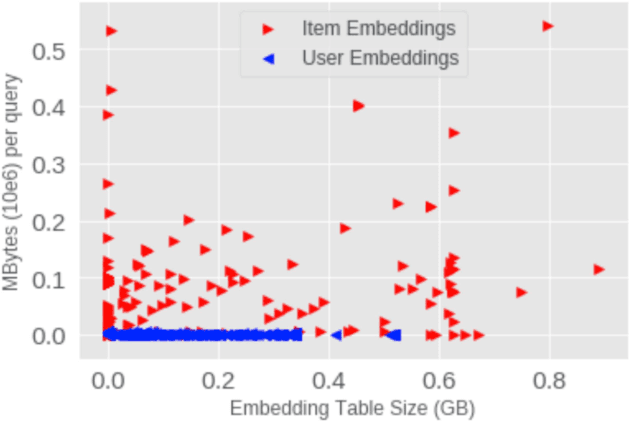
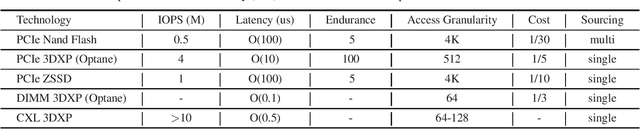
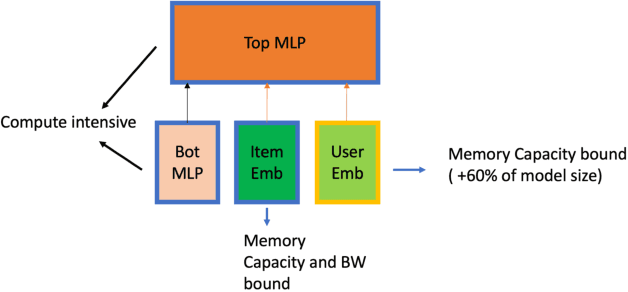
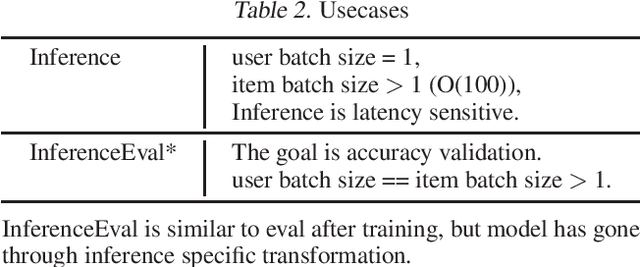
Deep Learning Recommendation Models (DLRM) are widespread, account for a considerable data center footprint, and grow by more than 1.5x per year. With model size soon to be in terabytes range, leveraging Storage ClassMemory (SCM) for inference enables lower power consumption and cost. This paper evaluates the major challenges in extending the memory hierarchy to SCM for DLRM, and presents different techniques to improve performance through a Software Defined Memory. We show how underlying technologies such as Nand Flash and 3DXP differentiate, and relate to real world scenarios, enabling from 5% to 29% power savings.